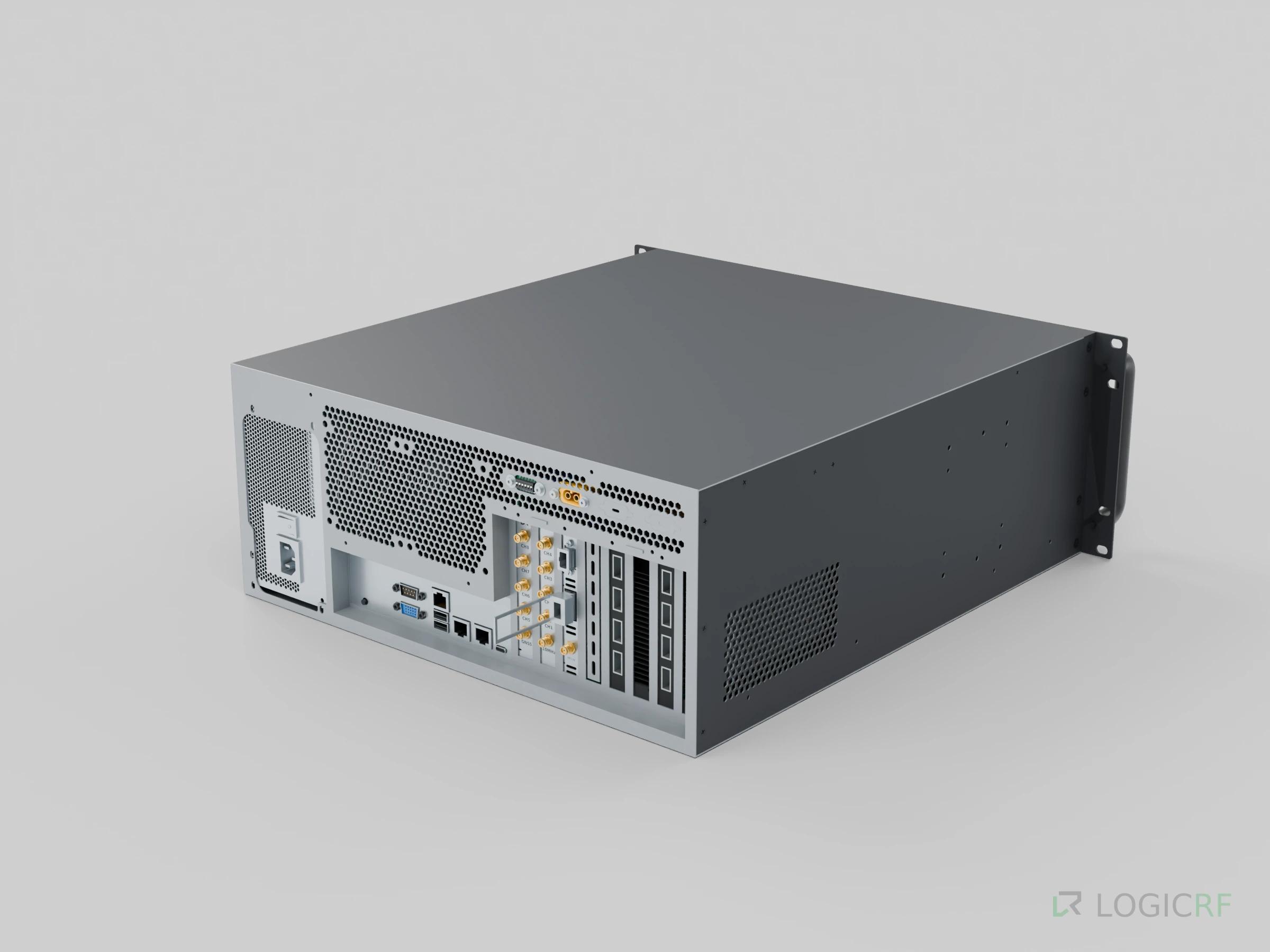
Signal acquisition and recording systems / NEW PRODUCT
Raven S508
Multichannel High-Speed Signal Acquisition and Storage System
Eight RF acquisition channels, a host computer and local recording storage share one enclosure for IQ recording, offline analysis and system integration. Two optional GPUs can accelerate signal processing.
- RF acquisition channels8 receive channels based on R508 acquisition technology
- Acquisition to host100 GbE data link between the acquisition unit and the host computer
- Management connectionSeparate from the high-speed link for device management and recording control
Bring RF acquisition, host processing and recording into one system.
A 100 GbE data link connects the acquisition unit to the host computer inside the enclosure. Choose the concurrent channel count, IQ rate per channel and recording time, then size the processor, memory, storage and optional GPUs.
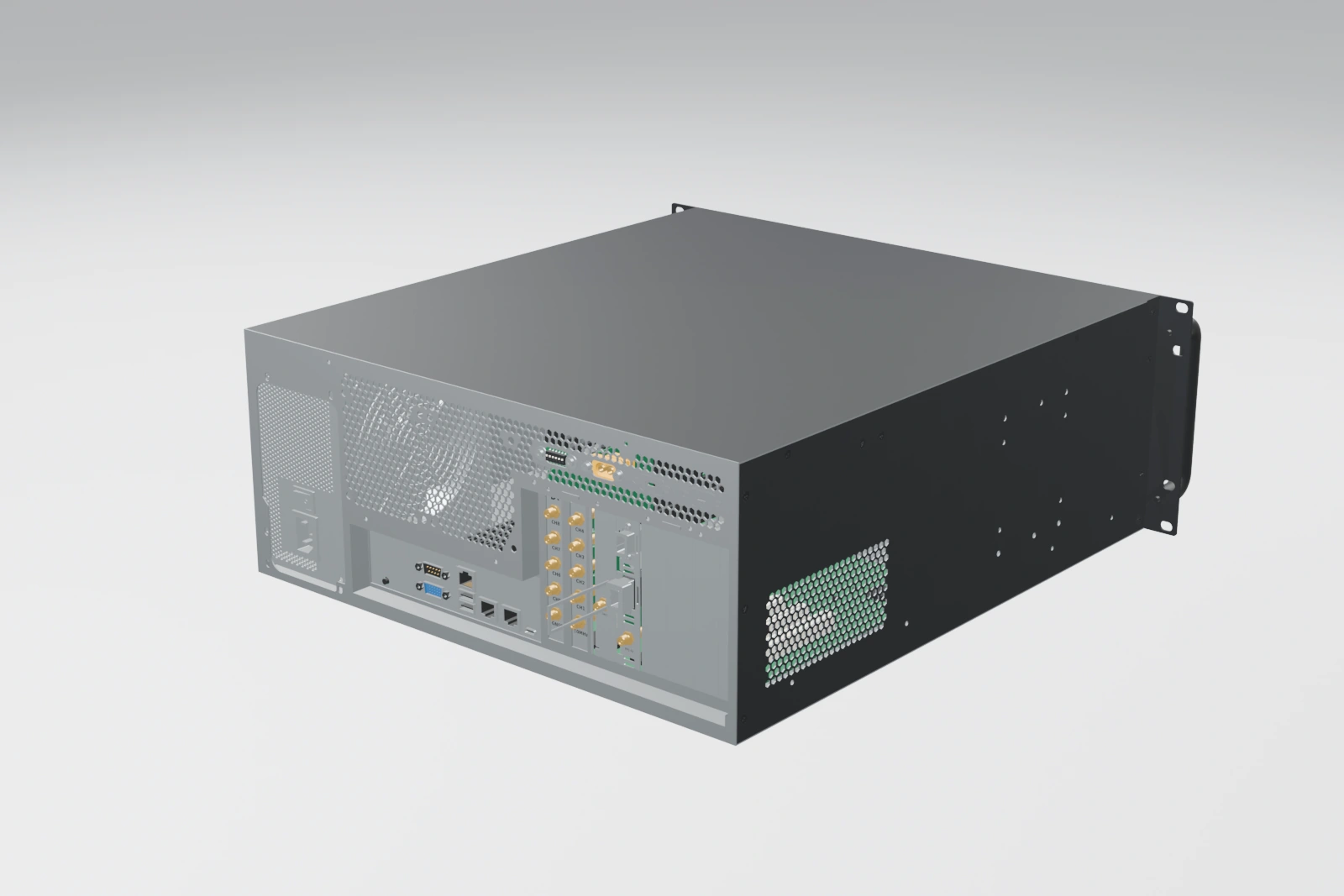
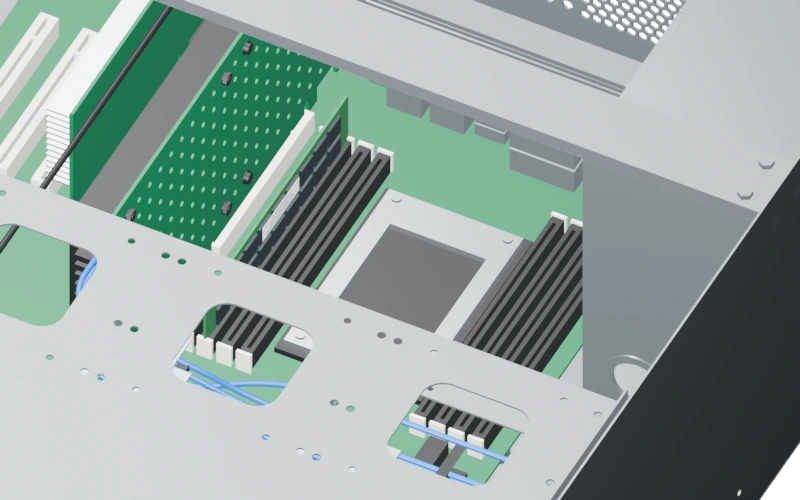
Chassis illustration. Interfaces and internal layout depend on the delivered configuration.
System configurator
Choose your channels, computing resources and recording storage. See your configuration take shape inside the chassis.
Configuration details
Processor and BIOS compatibility
The options follow ROMED8-2T support for EPYC 7002 / 7003 processors. Check the installed BIOS against the motherboard support list. Processor, BIOS, power and cooling must be matched to the system.
Motherboard compatibility informationCapacity and recording rate
Total nominal capacity is calculated from drive count and capacity per drive. 100 GbE describes the acquisition link. Sustained recording performance also depends on channel count, IQ format, per-channel IQ output rate, the host and storage configuration.
GPU and expansion combinations
Choose 1 or 2 GPUs. An 8-channel DAC configuration supports at most 1 GPU. Cards have dual-slot thickness and a maximum length of 330 mm. GPUs, drives and other expansion cards must be arranged for the available slots, power and cooling. The final system configuration defines the combination.
Key specifications
Select the host, front end and storage for the channel configuration, output rate and recording duration.
Acquisition and data interfaces
| RF acquisition channels | 8 receive channels based on R508 acquisition technology |
|---|---|
| Acquisition to host | 100 GbE data link between the acquisition unit and the host computer |
| Management connection | Separate from the high-speed link for device management and recording control |
| RF front end | Frequency band, gain and input limits depend on the configured front end |
Standard and optional configuration
| Processor | AMD EPYC 7542 (SP3) standard; SP3-series processors optional |
|---|---|
| Memory | 64 GB DDR4 standard; 512 GB (8 × 64 GB) optional |
| Standard recording storage | 3.2 TB default, standard range 3.2–32 TB. Larger capacities require project review. |
| GPU | Up to two optional GPUs for signal processing, or one GPU with eight DAC channels |
| Power supply | Power supply rated up to 2200 W |
Timing and system integration
| Reference and timing | Frequency reference, PPS and GNSS time information as configured |
|---|---|
| Enclosure and cooling | Integrated acquisition, host and recording storage with internal power distribution and active cooling |
100 GbE specifies the acquisition link. Confirm sustained recording with the channel count, IQ format and selected recording storage.
Recording and data management
Set up the recording task with the channel selection, IQ format and sample rate. After recording, use the task manifest to open each file or segment up to its valid length for offline analysis.
| Device management and reception | ULMUS, Device SDK and DAQ Server matched to the system as delivered |
|---|---|
| System and recording storage | A dedicated recording volume stores capture files and segments. Size it for the target output rate and recording time. |
| Recording metadata | The task manifest records channels, format, sample rate, valid length and error status |
| IQ storage example | 4 bytes per complex sample for I16 + Q16, before file and system overhead |
PLAN YOUR INTEGRATION
Plan your integration requirements.
Acquisition & recording
Define the channel configuration, recording workflow and operating conditions.
Host & storage
Assess host reception and storage configuration against the data path.
System interfaces
Discuss clock, trigger, synchronization and external-system requirements.
Frequently asked questions
How do I confirm sustained recording performance?
Specify the number of concurrent channels, IQ rate per channel, format and target recording time. Confirm the sustained write rate and capacity for the selected host computer and storage. 100 GbE is the link between the acquisition unit and the host.
DOCUMENTATION & SUPPORT
Documentation & resources
EXPLORE MORE
Related products
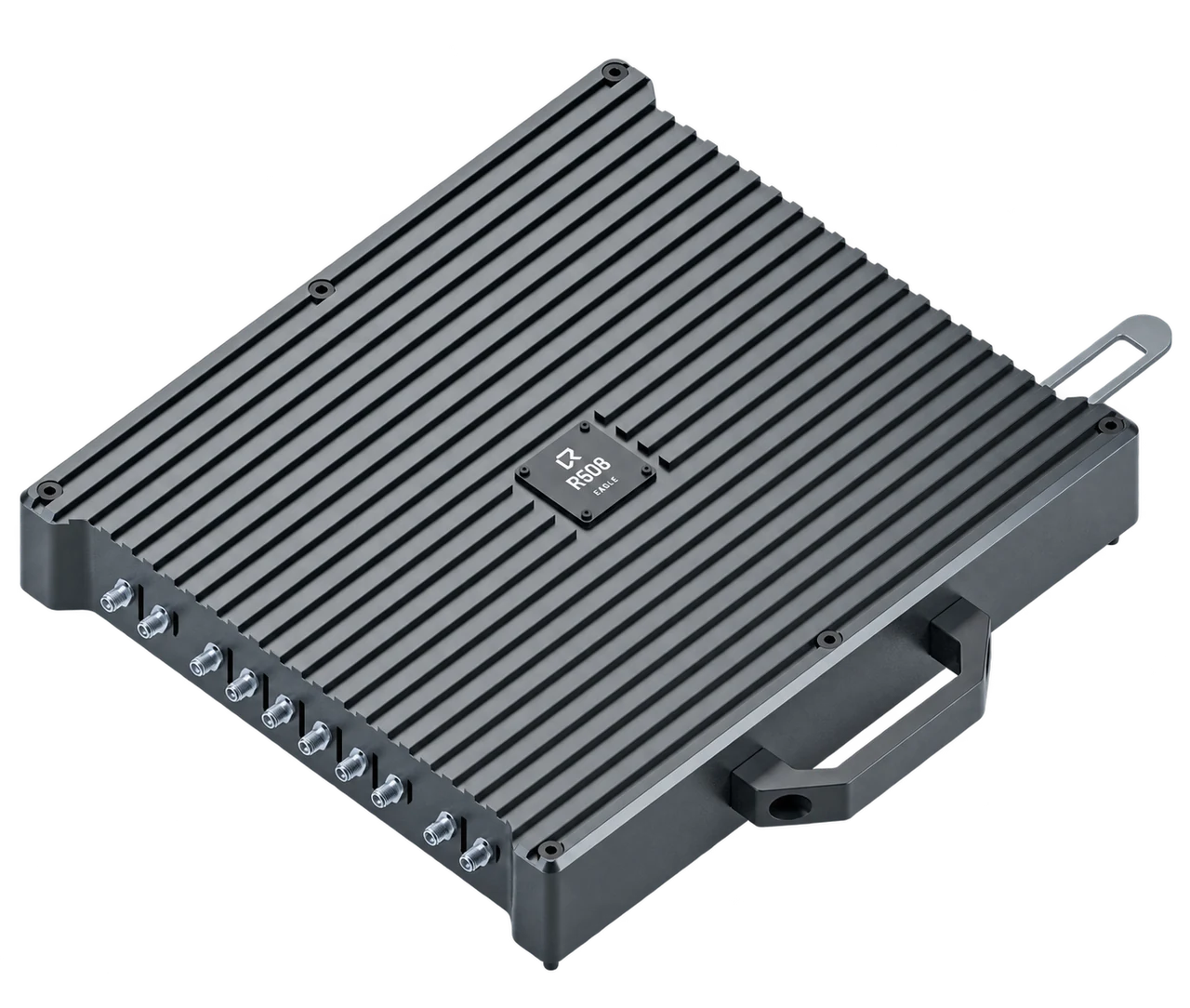
Eagle R508
Multichannel RF Acquisition SDR Platform
Configure the radio, control acquisition from a host computer, and receive and record IQ data for signal analysis or your own multichannel RF application.
View product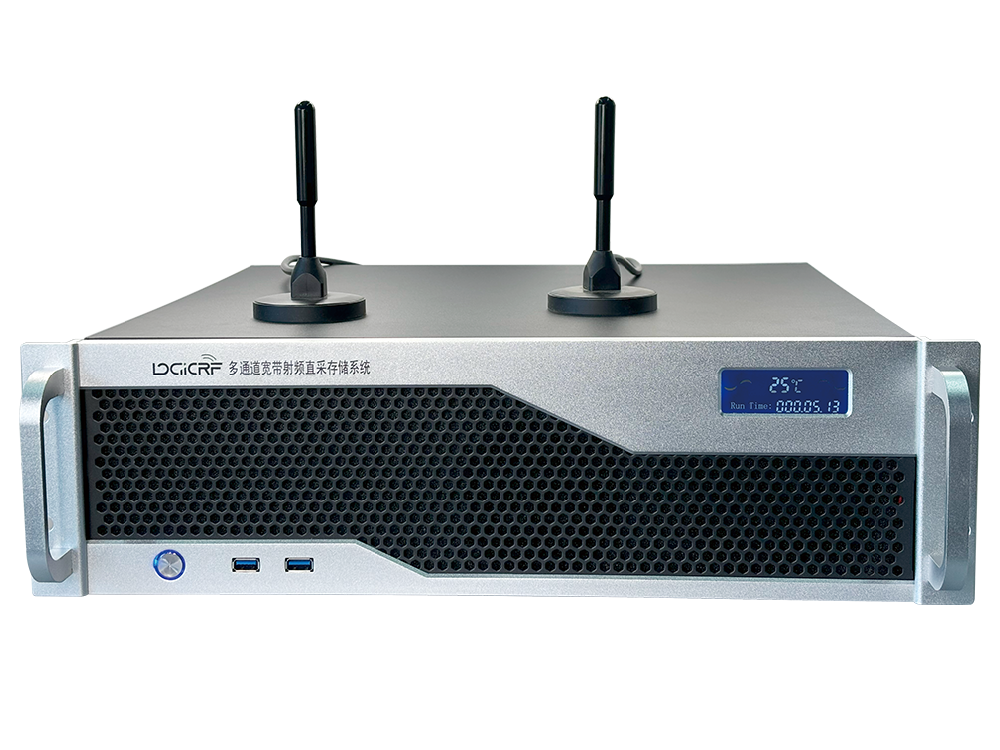
S407
Not recommended for new designsWideband RF Transceiver and Recording System
An integrated eight-receiver, four-transmitter configuration with local storage for wideband recording and multichannel signal processing experiments.
View product